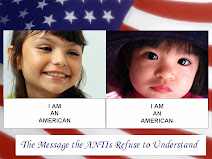
In a way, ANTIs are right. From an ethnic/cultural perspective, this country is changing rapidly.
As my long time viewers know, my husband loves sports and enjoys watching "classic" sports on TV. This morning he was watching Classic Bowling from the 1970s. The clothes and the hair styles were hilarious. The men wore suits, from suit with tie to leisure suits to plaid pants. They had long hair with sideburns. The women wore helmet head hairdos with lots of teasing and hairspray and little dresses with belts and heels. Many people wore glasses, the men the horn rimmed, the women the little granny glasses. I didn't see one minority in the audience. Additionally, no one was on the phone or on a computer.
I compare this picture with a visit to my local bowling center or casino. There is so much diversity. Everyone is wearing casual clothes, from jeans to slacks, to sweat pants. Hair is different, from shaved head, to long-hair, to make-up to no make-up, to piercings, to tattoos. There is every ethnicity. I'd estimate there was about 50% white, 20% Latino, 15% Black, 10% Asian, 5% Other. Almost everyone has a cell phone and a few had their laptops.
Last night at the "sino" on the slots, I sat next to a Vietnamese family, a father played while his two daughters watched. They were speaking Vietnamese to Dad and the two girls were giggling, half in Vietnamese and half English. Both our machines were winning, so we started high-fiving each other with each win and we began a casual conversation. The girls recently immigrated. Their Dad had arrived years ago and brought the rest of the family later. (I did not ask if they were legal or not. I just assumed they were in progress.) I actually spoke with another family of another ethnicity a few weeks ago and the daughter came in legally with a temporary visa, but overstayed, so she was technically here illegally, but was working with Immigration to gain legal status.

The ANTIs are right. Our country is changing and changing rapidly. We are not the plaid pants/leisure suit all white audience we were 30 years ago. It is amazing to think how quickly our country has changed. The Civil Rights Movement was only 40 years ago. We were not a diverse culture then, as we are now. The Jim Crow laws held many people of various ethnicities down.
I think of the Vietnamese families I've seen. We have two Vietnamese churches in our little suburb. Many of the Vietnamese families immigrated and obtained Asylum at the end of the war. Today, many families are granted Asylum status due to the War(s) in the Middle East/their home countries.
Since World War II, more refugees have found homes in the U.S. than any other nation and more than two million refugees have arrived in the U.S. since 1980. During much of the 1990s, the United States accepted over 100,000 refugees per year, though this figure has recently decreased to around 50,000 per year in the first decade of the 21st century, due to greater security concerns. Still, of the top ten countries accepting resettled refugees in 2006, the United States accepted more than twice as many as the next nine countries combined. As for asylum seekers, the latest statistics show that 86,400 persons sought sanctuary in the United States in 2001.
The rate of immigration and the number of immigrants from various countries are contributing to the current backlog in the Immigration Courts. As I've previously written, 40% of those termed "illegal" are Visa overstays and are attempting to work their status through the very backlogged immigration courts.
Regardless of why the demographics are changing, what is important is that we understand the changes and accept the fact that our country and the demographics will continue to change. We need immigration reform to resolve our broken immigration policies, fix the backlog in the courts, streamline the process, and end, once and for all, all of the hatred, anger and imprisoning of workers due to legal status.
Since World War II, more refugees have found homes in the U.S. than any other nation and more than two million refugees have arrived in the U.S. since 1980. During much of the 1990s, the United States accepted over 100,000 refugees per year, though this figure has recently decreased to around 50,000 per year in the first decade of the 21st century, due to greater security concerns. Still, of the top ten countries accepting resettled refugees in 2006, the United States accepted more than twice as many as the next nine countries combined. As for asylum seekers, the latest statistics show that 86,400 persons sought sanctuary in the United States in 2001.
The rate of immigration and the number of immigrants from various countries are contributing to the current backlog in the Immigration Courts. As I've previously written, 40% of those termed "illegal" are Visa overstays and are attempting to work their status through the very backlogged immigration courts.
Regardless of why the demographics are changing, what is important is that we understand the changes and accept the fact that our country and the demographics will continue to change. We need immigration reform to resolve our broken immigration policies, fix the backlog in the courts, streamline the process, and end, once and for all, all of the hatred, anger and imprisoning of workers due to legal status.





 Posts
Posts